The AL Central is a long way from its stronger eras. In 2025, the five clubs in the division combined for just 387 wins, tied with the NL West for the fewest by any division. Unlike the NL West, which included the World Series champion Dodgers and the historically awful Rockies, the AL Central had no true powerhouse, making it the weakest division in baseball overall.
That could begin to change if Detroit continues to rise. The Tigers have the best pitcher in the American League, a solid offensive core, and one of the game’s most exciting prospect pipelines.
Kansas City also has a chance to take a real step forward, while Cleveland proved last season that it cannot be dismissed. Minnesota and Chicago, however, are clearly still in rebuilding mode.
Can the Cleveland Guardians Repeat as AL Central Champions?
For most of 2025, Cleveland looked like a team headed toward an uninspiring finish. The Guardians were one game over .500 at the start of September, sat in third place, and trailed Detroit by 10.5 games. With Emmanuel Clase and Luis Ortiz leaving the team amid a gambling scandal, it would have been understandable if the season simply drifted away.
Instead, Cleveland finished with a furious 20-7 run in September, caught the Tigers, and won the AL Central on the final weekend. The Guardians then lost to Detroit in the Wild Card Series, but the finish still gave the fan base something to appreciate. José Ramírez once again carried the offense and was baseball’s only 30-40 player.
Cade Smith stabilized the bullpen after Clase’s departure, and Gavin Williams anchored the rotation with the lowest second-half ERA among qualified AL starters.
Cleveland was extremely quiet, even by small-market standards. Shawn Armstrong was the only notable addition, and there were no major outgoing losses either.
The biggest offseason developments were negative ones, as it became increasingly clear that Clase and Ortiz would not be returning anytime soon. The organization did, however, lock up Ramírez through 2032, which was an important piece of business.
The path to contention again runs through the pitching staff. Williams has the talent to keep progressing, even if his second-half numbers from last season were probably difficult to sustain. Tanner Bibee has room to rebound, and Joey Cantillo showed enough late to remain interesting.
Even without Clase, the bullpen still has the pieces to be a major strength if Smith, Armstrong, and Hunter Gaddis perform as expected. If the pitchers keep games close, Ramírez may once again be able to drag the offense to relevance.
Cleveland’s margin for error is extremely thin. Outside of Ramírez, Steven Kwan, and Kyle Manzardo, the lineup lacks proven above-average bats. That was already a problem last year, when the Guardians finished 28th in runs scored.
The rotation is also fragile behind the top names, with Slade Cecconi, Logan Allen, and Cantillo all carrying limited track records. If the offense remains weak, even a decent pitching staff will not be enough.
Cleveland’s most realistic postseason path is winning the AL Central again, and that feels much less likely this time. The more probable scenario is that Detroit or Kansas City takes control, Cleveland hangs around for a while, and the organization begins shifting toward the future at the deadline. This may end up being a season more about Chase DeLauter, Travis Bazzana, Angel Genao, and Cooper Ingle than about another division banner.
Are the Detroit Tigers the Team to Beat in the AL Central?
Detroit looked like the clear class of the AL Central for most of 2025, piling up 18 wins in April and 19 more in May. Then came a stunning collapse.
The Tigers went 7-17 in September and watched Cleveland steal the division on the final weekend. Detroit got some revenge in October by eliminating the Guardians in the Wild Card Series, then pushed Seattle to the limit before losing in 15 innings of Game 5 in the ALDS.
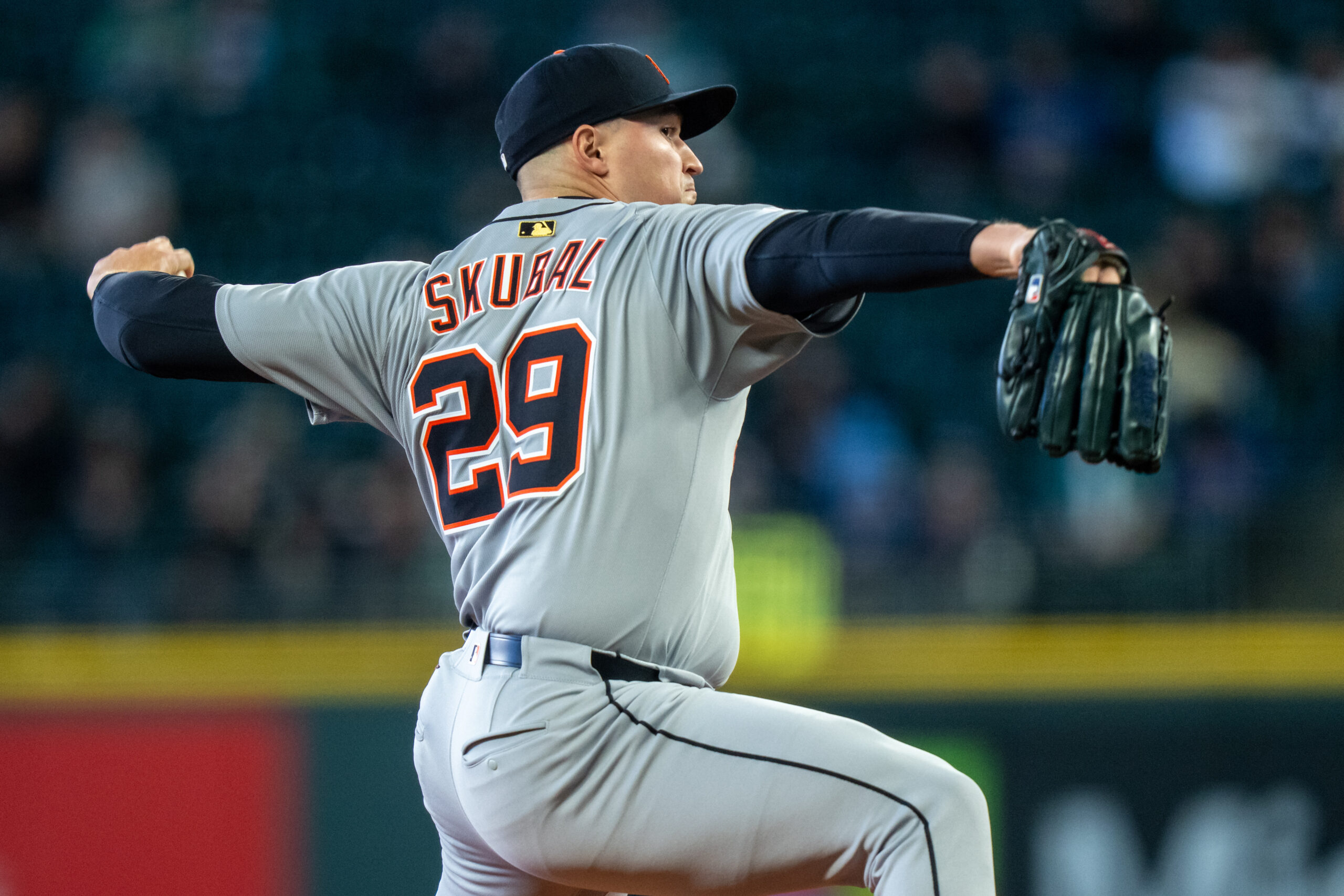
Tarik Skubal remained the franchise cornerstone and won a second straight AL Cy Young Award. The offense did not have a singular superstar, but Riley Greene, Spencer Torkelson, Kerry Carpenter, and Gleyber Torres all made meaningful contributions.
Detroit was mostly quiet until late in the winter, when the front office delivered several significant moves. Jack Flaherty exercised his option, Gleyber Torres accepted the qualifying offer, and Drew Anderson was added after pitching in the KBO.
Kenley Jansen signed to handle most of the ninth-inning work, Kyle Finnegan returned on a two-year deal, and then the Tigers made their biggest move by signing Framber Valdez to a three-year, $115 million contract. That gives Detroit a legitimate No. 2 starter behind Skubal. The feel-good move came just before spring training, when Justin Verlander returned on a one-year deal.
Detroit still looks like the most complete team in the division. Skubal and Valdez form a powerful top two, while Jansen, Will Vest, and Finnegan give the bullpen reliable late-inning options. Offensively, there is room for growth if Greene and Torkelson avoid the second-half fades they experienced last season.
The bigger source of upside, though, is the farm system. Kevin McGonigle could be ready quickly, and Max Clark and Josue Briceño are talented enough to force their way into the picture by midseason. Even if the biggest impact from that group comes later, Detroit has enough now to lead the division.
There is less fallback here than it might seem. Skubal is elite and Valdez is dependable, but there are real concerns behind them.
Flaherty struggled last season, Casey Mize faded badly in the second half, Verlander is 43, and Anderson remains an unknown at this level. Jansen is also 38, and Finnegan’s traffic-heavy pitching style always carries some volatility.
On offense, Detroit’s good hitters still have limitations, and there is not a veteran bat likely to suddenly become much more than he already is.
The weakness of the division works in Detroit’s favor. Kansas City should make this interesting, but the Tigers still appear to have the best chance to come out on top. They may not have the kind of roster built for a comfortable Wild Card fallback, which makes winning the AL Central especially important, but they remain the most likely division winner.
Will the Kansas City Royals Challenge for the AL Central Crown?
The Royals were a perfectly average team. Their pitching staff ranked among the top 10 in baseball, but the offense was among the bottom 10, and the result was an 82-80 finish with a plus-14 run differential. Kansas City spent most of the year hovering around .500 and entered September 9.5 games behind Detroit before Cleveland’s late surge changed the division picture.
There were still several positives. Even with Cole Ragans dealing with injuries, the rotation held together behind Kris Bubic, Michael Wacha, and Noah Cameron.
The bullpen was steady thanks to Carlos Estévez, Lucas Erceg, and John Schreiber. At the plate, Maikel Garcia took an important step forward, and Bobby Witt Jr. remained one of the league’s best all-around players even without his absolute best season.
The Royals were quieter than many expected. Matt Strahm was added to strengthen the bullpen, Lane Thomas signed a one-year deal, and Isaac Collins arrived via trade to improve an outfield group that had been one of the weakest in the majors. One of the most important pieces of business, though, had actually been completed the prior summer, when the club extended Seth Lugo rather than risk losing him in free agency.
Kansas City has a legitimate chance to take the division if a few key things go right. A healthy Ragans over 30 starts would give the rotation a completely different look, especially with Bubic’s upside and the reliable innings from Wacha, Lugo, and Cameron.
The offense also has paths to improvement. Witt can return to true superstar production, Jac Caglianone can take a significant step forward after a quiet rookie season, and Carter Jensen showed enough late last year to be worth real attention. Collins and Thomas are not stars, but both should be upgrades over what Kansas City had last year in the outfield.
The biggest issue is still the lineup. Even with a few improvements around the edges, the outfield remains one of the weaker groups in the league, and Salvador Perez is entering his age-36 season. The adjusted dimensions at Kauffman Stadium may help the offense, but they could hurt the pitching staff too, and several Royals starters outperformed their indicators last season.
If the lineup stays near the bottom of the league in run production, Kansas City will have a hard time separating from the middle of the pack.
The Royals have enough talent to seriously challenge Detroit. This feels like a team that should stay in the division race deep into September and has a real shot at returning to the postseason. If Ragans pitches like an ace and Witt returns to MVP-caliber form, Kansas City could win the AL Central.
Why the Minnesota Twins Are Focused on Rebuilding
Minnesota essentially waved the white flag in 2025. The Twins were still in the race around the All-Star break, but the front office decided the roster was not good enough and sold aggressively at the trade deadline, moving out key players such as Jhoan Duran and Carlos Correa. The collapse had already begun by then.
Minnesota opened June at 31-26, then went 39-66 the rest of the way. There were still individual positives. Byron Buxton stayed healthy enough to set career highs in home runs, RBI, and runs scored, while Joe Ryan delivered strong ratios and threw a career-high workload.
As expected for a rebuilding club, the Twins did very little. Josh Bell was signed to a one-year deal, Victor Caratini was added on a two-year contract, and Eric Wagaman arrived in a January trade. The biggest piece of offseason news was a blow, as Pablo López was lost for the entire 2026 season after requiring Tommy John surgery.
This season is about development, not contention. Walker Jenkins headlines the next wave and should debut early if he does not break camp with the team. Luke Keaschall and Brooks Lee are already in the majors and still have room to grow, while Keaschall’s brief performance last year was especially encouraging.
The pitching side needs progress as well, particularly from Zebby Matthews and David Festa. If Buxton and Ryan perform well enough to create meaningful trade decisions for the front office, that would also represent useful value in a rebuilding year.
Things could get ugly quickly. Minnesota had the worst record in the American League after the 2025 All-Star break, and the current roster still has many of the same concerns. Buxton and Royce Lewis continue to carry major injury risk, and the younger players are far from guaranteed to hit the ground running.
Jenkins and Emmanuel Rodriguez might not make immediate impacts, and the organization has been waiting on Matthews and Festa for multiple years already. There is a real chance the Twins spend most of the season near the bottom of the league.
Minnesota should fall out of the division race fairly early, but the deeper slide may come after the deadline, when several veterans could be moved. This is shaping up as a season focused on asset management and player development more than standings.
What to Expect from the Chicago White Sox in 2026
The White Sox remained deep in their rebuild, but 2025 was at least a step up from their disastrous 2024. Chicago won 60 games, still the second-fewest in the American League, but 10 more than the previous year. The progress came through broader roster improvement rather than one dominant player.
Colson Montgomery needed only 71 games to lead the team in WAR and hit 21 home runs. Kyle Teel posted a strong on-base percentage in 78 games, and Shane Smith emerged as the club’s best pitcher with a 3.81 ERA over 29 starts.
Chicago did not make a run at major free agents, but it did add several useful pieces. The biggest move was signing Munetaka Murakami, a power-hitting Japanese slugger with real upside if his contact issues are manageable.
Anthony Kay was signed after two years in Japan, Sean Newcomb was added as rotation depth, Erick Fedde returned, and Seranthony Domínguez was brought in to take over the closer role. Austin Hays should get regular work in right field, and Luisangel Acuña arrived from the Mets in the Luis Robert Jr. trade.
This season is only about growth. Montgomery and Teel need to prove last year’s encouraging performances were sustainable, Murakami must adjust quickly to MLB pitching, and players such as Chase Meidroth and Miguel Vargas need to keep trending upward.
On the mound, it would help if Shane Smith or Sean Burke took another step. By midseason, Noah Schultz and Hagan Smith could also arrive and give White Sox fans something real to watch.
There is still a lot of downside here. Montgomery struck out often enough as a rookie to make a sophomore slump plausible, and Murakami’s swing-and-miss concerns are very real. The pitching staff lacks obvious difference-makers, and it is not clear whether Schultz or Hagan Smith will be fully ready this year.
The bullpen also lacks impact arms. Another 100-loss season is very much on the table.
Chicago still looks like the weakest team in the American League. There may be more individual bright spots than in recent seasons, but the roster as a whole is not ready to compete. For now, the focus has to remain on development and evaluating who can be part of the next meaningful White Sox team.
Leave a Reply