The NL Central may not get the same attention as some other divisions, but it was quietly stronger than many assumed last season. In fact, the five clubs combined for more wins than every division except the AL East, and it was the only National League division to send three teams to the postseason.
Milwaukee remains the standard after winning the division three straight years and leading the majors with 97 victories in 2025, but the path could be tighter in 2026. The Cubs are close, the Reds have real upside, and Pittsburgh is moving in the right direction even if it still appears a year away. St. Louis, meanwhile, has clearly shifted into a longer retool.
Why the Milwaukee Brewers Remain the NL Central Standard
Milwaukee produced the best regular season in franchise history by finishing 97-65. A 14-game winning streak in August was the signature stretch of a season in which the Brewers went 29-4 from July 6 through Aug. 16. They finished second in baseball in ERA and third in runs scored despite lacking a true MVP-caliber offensive superstar.
That style worked in the regular season, but the lack of star power became more noticeable in October. Milwaukee survived a five-game NLDS against the Cubs and then was swept by the Dodgers in the NLCS. The pitching mostly held up, but the offense scored only 26 runs over nine postseason games.
The Brewers once again made creative, budget-conscious moves. The biggest was the January trade that sent Freddy Peralta to the Mets for Jett Williams and Brandon Sproat, a deal influenced in part by Brandon Woodruff accepting the qualifying offer. Later, Milwaukee traded Caleb Durbin to Boston for a three-player package that included Matt Harrison.
The rest of the winter featured lower-profile additions such as Luis Rengifo, Gary Sánchez, and Angel Zerpa. As usual, the Brewers made several moves without dramatically changing the shape of the roster.
Milwaukee may not match 97 wins again, but it still has a roster capable of winning the division. Jackson Chourio could take another step in his age-22 season, and William Contreras may rebound fully once he is past a finger issue that nagged him last year. Brice Turang’s emergence also looked legitimate rather than fluky.
The pitching staff should remain strong despite losing Peralta. Jacob Misiorowski looks like a future ace, Logan Henderson was excellent in limited work, and Woodruff, Quinn Priester, and Chad Patrick all bring value. Sproat could also arrive quickly, while the bullpen, led by Abner Uribe and Trevor Megill, is deep enough to preserve leads consistently.
Missing the postseason still feels unlikely, but there is a path where the Cubs overtake Milwaukee. Garrett Mitchell and Joey Ortiz need to hold up their end of the lineup, and there is some risk in the rotation. Priester and Patrick may struggle to repeat last season’s production, and while Woodruff posted a 3.20 ERA in 12 starts after missing all of 2024, his declining velocity bears watching.
Milwaukee remains one of the smartest and most stable organizations in baseball, and that should show again in 2026. The Brewers look like the best bet to win the NL Central for the fifth time in six years, with Chourio and Misiorowski helping lead the way.
How the Chicago Cubs Can Push for the Division Title
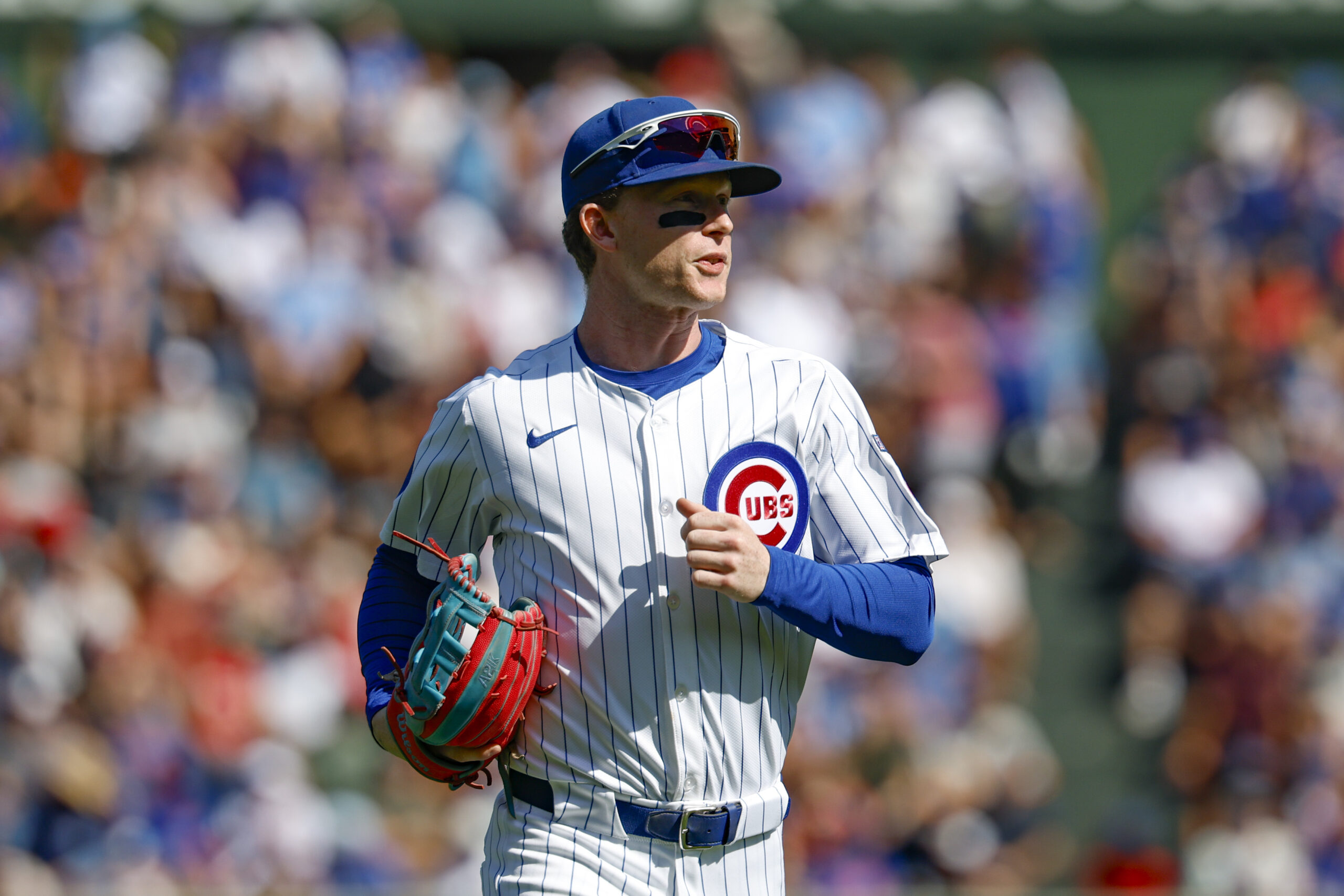
The Cubs looked like a serious division favorite early in 2025, sitting 36-22 at the end of May. They played solid baseball the rest of the way but not dominant baseball, going 56-48 and finishing five games behind Milwaukee. Chicago did make noise in October, eliminating San Diego in the Wild Card round before losing to the Brewers in a five-game NLDS.
Kyle Tucker defined much of the season. His arrival and strong start fueled optimism, but his production dropped sharply in the summer. Pete Crow-Armstrong and Seiya Suzuki followed somewhat similar arcs. On the pitching side, Matthew Boyd became an unexpected leader, Danny Palencia solidified the bullpen, and Cade Horton enjoyed a promising rookie season.
Chicago opened the winter with a surprise when Shota Imanaga accepted the qualifying offer. The front office then kept adding to the rotation by acquiring Edward Cabrera from Miami at the cost of Owen Caissie. The most notable lineup move came when the Cubs pivoted away from Tucker and instead signed Alex Bregman to a five-year deal.
The bullpen was also a clear focus, with Shelby Miller, Phil Maton, Hunter Harvey, Jacob Webb, and Hoby Milner all brought in to deepen the relief mix.
The Cubs are good enough to push Milwaukee all year. The lineup may not feature a true superstar, but it has depth and relatively few weak spots, especially if Crow-Armstrong returns to the first-half form that produced an .847 OPS. Nico Hoerner and Dansby Swanson remain underrated pieces, and Moisés Ballesteros could add something as a rookie.
The rotation also has a steady quality to it. There may not be a classic ace, but if Justin Steele returns healthy and the rest of the group performs as expected, Chicago can again pile up wins by consistently getting dependable starts.
The biggest danger is on the mound. Boyd is older, has an extensive injury history, and is a clear regression candidate. Imanaga’s ERA indicators were less flattering than his actual results, Horton’s late surge may not hold, Cabrera is not durable, and Steele is far from certain. If several pitchers disappoint at once, the Cubs could find themselves fighting merely for a Wild Card spot.
Chicago should remain in the division race deep into September and is well positioned to reach the postseason even if Milwaukee edges it out. The Cubs also profile as a dangerous postseason team because of how their rotation is built.
Cincinnati Reds: Upside, Youth, and Uncertainty
Cincinnati deserves credit for reaching the postseason for the first time in a full season since 2013, but the overall performance was still fairly modest. The Reds went 83-79, only marginally better than prior seasons, and were roughly average in both scoring and run prevention. They also finished the season by being swept and outscored 18-9 by the Dodgers in the postseason.
Still, there were real positives. Hunter Greene, Nick Lodolo, and Andrew Abbott each posted ERAs below 3.35, Brady Singer led the staff in wins, innings, and strikeouts, and Emilio Pagán emerged as a trustworthy closer. Elly De La Cruz powered the offense by leading the team in home runs, RBI, runs, and steals.
The Reds moved slowly at first, bringing Pagán back on a two-year deal, adding Pierce Johnson, and acquiring Brock Burke in a three-team trade. They also made smaller outfield adjustments by signing JJ Bleday and trading for Dane Myers.
Then came the move that changed the tone of the offseason: signing Eugenio Suárez on Feb. 1. Cincinnati badly needed a middle-of-the-order thump, and Suárez provides it. The downside arrived in spring training, when Greene was diagnosed with an elbow issue that will require surgery and keep him out until at least July.
There is enough young talent here for Cincinnati to improve. De La Cruz played through a quad strain all of last year and could push toward MVP consideration if healthier in 2026. Noelvi Marte and Sal Stewart can strengthen the lineup, and Matt McLain may be better now that he is further removed from shoulder surgery.
The rotation still has upside even without Greene early on, and if he returns strong in the second half, the Reds could have one of the better staffs in the league. Chase Burns is another high-upside arm who could emerge quickly after getting a first taste of the majors.
Not every young player develops on schedule, and that matters a great deal for this roster. Marte, Stewart, and Burns all carry real downside.
Offensively, Cincinnati could be overly dependent on De La Cruz if Suárez does not immediately deliver or if Bleday, McLain, and Ke’Bryan Hayes remain underwhelming. On the mound, Greene’s absence looms large, and Abbott may struggle to repeat his 2.87 ERA. Pagán also still has a limited history as a dominant closer.
Suárez gives the lineup a much-needed anchor, and that should help Cincinnati remain in the postseason conversation. The Reds still do not look as complete as Milwaukee or Chicago, but they should stay relevant into September and finish above .500.
Inside the St. Louis Cardinals’ Aggressive Retool
The Cardinals were below average across the board in 2025. They finished 78-84, ranked 19th in runs scored and 21st in runs allowed, and faded badly after a respectable first half.
No starter posted an ERA below 4.20 over at least 100 innings, and no hitter topped 20 home runs or 80 RBI. Much of the lineup lacked punch, with seven players posting an OPS below .700 across meaningful playing time.
The one clear strength was defense. Led by Masyn Winn and Victor Scott II, St. Louis graded very well in several key fielding categories.
Chaim Bloom pushed the retool into a more aggressive phase. Sonny Gray was traded to Boston for a prospect package led by Richard Fitts, and Willson Contreras was later sent there as well in a return headlined by Hunter Dobbins. Nolan Arenado was eventually dealt to Arizona, though St. Louis had to eat a notable portion of the contract.
The club did bring in Dustin May and Ryne Stanek on one-year deals, but the bigger story was clearly the removal of veteran core pieces.
A good season would be defined by younger players taking meaningful steps. Ivan Herrera can continue to grow offensively while improving defensively, Lars Nootbaar needs to bounce back at the plate, and Nolan Gorman and Jordan Walker both need to show they still belong in the long-term plan.
On the mound, Matthew Liberatore and Michael McGreevy can progress, while Dobbins and Fitts look to build on encouraging early impressions. JJ Wetherholt could also arrive early and give the organization a central player to build around.
This team could struggle to reach 70 wins. The rotation lacks swing-and-miss ability, which places tremendous pressure on the defense and the bullpen.
The relief group has a few useful pieces but not enough depth to cover for short outings if the rotation falters. And after the winter teardown, the lower half of the lineup could be especially thin.
St. Louis looks more likely to battle Pittsburgh than to threaten the division’s top teams. That is not necessarily a problem if the season produces clarity around which young players can help drive the next competitive Cardinals roster.
Can Paul Skenes and the Prospects Lift the Pittsburgh Pirates?
Pittsburgh went 71-91 and extended both its losing streak of seasons and its run of finishing near the bottom of the division. The offense was dreadful, ranking last in baseball in scoring and finishing with 31 fewer home runs than any other team. The saving grace was Paul Skenes, who followed up his remarkable debut with another ERA under 2.00 and won the NL Cy Young Award.
Thanks largely to Skenes, the pitching staff finished seventh in ERA. Mitch Keller, Carmen Mlodzinski, Dennis Santana, and Braxton Ashcraft also helped stabilize things, even if none carried the same star power.
The Pirates were more active than usual, likely recognizing the need to build a more respectable club around Skenes while he is under team control. They landed Brandon Lowe, Jake Mangum, and Mason Montgomery in a three-team trade, signed Ryan O’Hearn to the largest free-agent contract ever given by the franchise to a hitter, and added Marcell Ozuna on a one-year deal.
These are not splashy moves in a major-market sense, but by Pittsburgh’s standards they represented a meaningful effort to improve the offense.
The real optimism comes from the prospect wave. Konnor Griffin is viewed by many as the best prospect in baseball and could reach the majors quickly. Bubba Chandler also has the talent to claim a rotation spot right away. If those two, along with names such as Hunter Barco and Jhostynxon Garcia, contribute early, the roster could take a real step.
There is also rebound potential within the current core. Oneil Cruz and Bryan Reynolds are both coming off disappointing years, and the additions of Lowe, Ozuna, and Mangum should at least raise the lineup’s baseline. If enough goes right, the Pirates could flirt with the Wild Card race.
There is a lot of risk in assuming prospects will save the day immediately. Griffin and Chandler are exciting, but rookie impact is never guaranteed. Among the veterans, Cruz still strikes out too much, Lowe has durability concerns, O’Hearn is more solid than special, and Ozuna’s performance slipped badly enough in Atlanta that he was benched at times.
Jared Jones is already on the 60-day IL, which takes away another important arm. If the offense again proves punchless, another 90-loss season is very much in play.
The Pirates are moving in the right direction, but they still look short of true contention. A strong season would mean finishing above .500 and seeing Griffin and Chandler establish themselves. If that happens, the organization will face real pressure to invest more aggressively next winter.
Leave a Reply