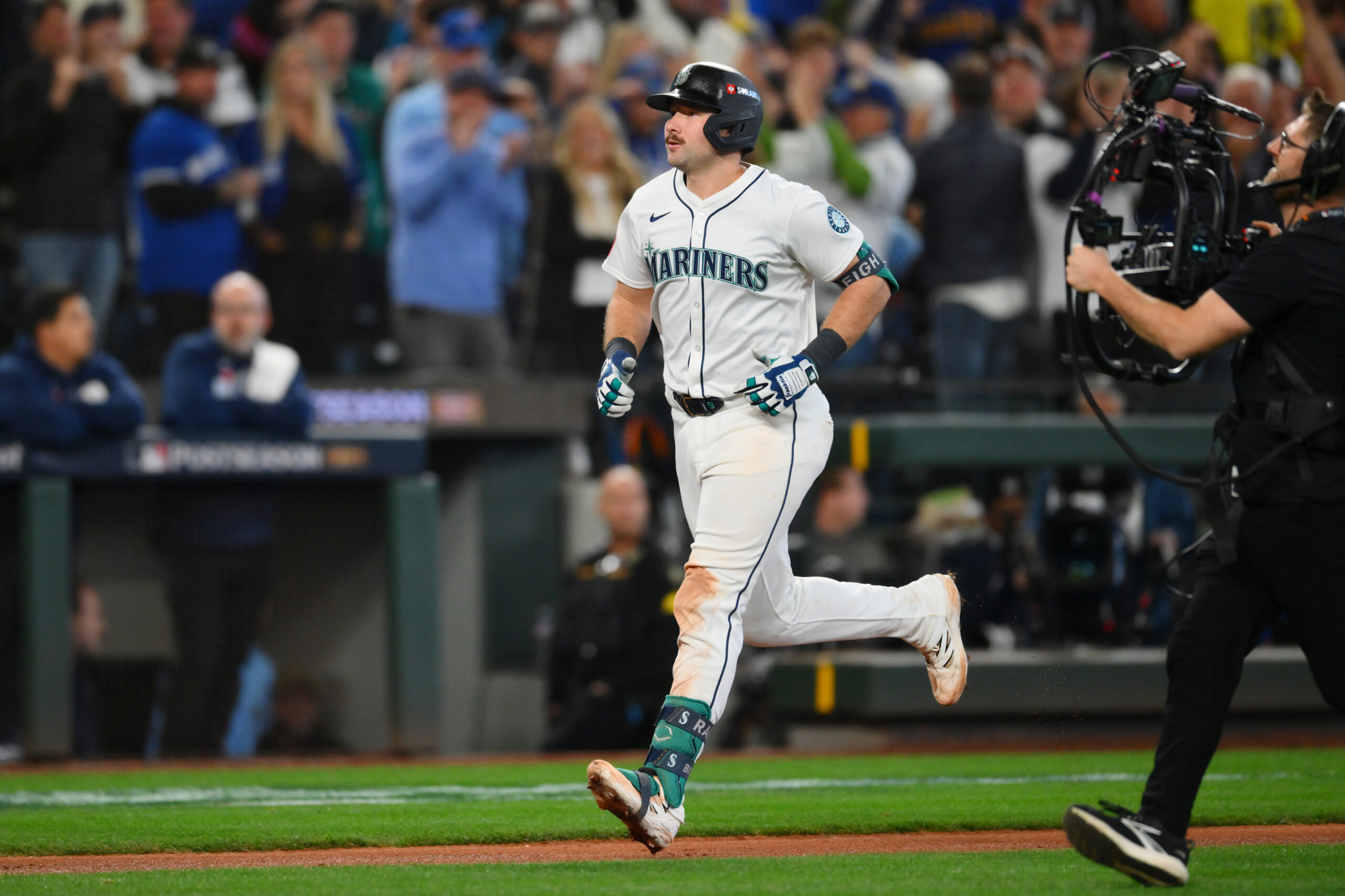
Cal Raleigh delivered one of the most impactful seasons a catcher has provided in years, both for Seattle and for fantasy baseball managers. His 2025 campaign placed him in rare company, as he became only the fourth catcher in MLB history to record three separate seasons with 30 or more home runs.
The power surge was dramatic enough that he nearly matched his combined home run total from the previous two seasons, signaling a legitimate shift rather than a fluke. Seattle benefited from more than just his bat, but in fantasy baseball points leagues his value stemmed primarily from elite power generation at a position where most players struggle to reach double-digit home runs.
What to Expect from Cal Raleigh in 2026 Fantasy Baseball
Raleigh embraced the torpedo bat trend early and paired that with mechanical adjustments to both his stance and swing. Those changes helped him elevate the ball more consistently and sustain career-best marks in fly ball rate and home run output.
The consistency was just as impressive as the volume. He produced at least 10 home runs in four different months and reached 38 before the All-Star break. That stretch showcased premium bat speed, loft, and barrel frequency that did not dissipate as pitchers adjusted.
The question entering 2026 is how much of that production is sustainable. Raleigh maintained a home run-to-fly ball rate (HR/FB) of at least 22% in every month of the 2025 season. Projecting him for 50 or more home runs requires optimism, but a three-year rolling average lands slightly above 40.
For a catcher, that level of output remains elite even if regression hits. Raleigh stays in the lineup as frequently as any catcher in baseball thanks to DH usage on rest days and strong receiving fundamentals. He did not allow a passed ball during the regular season and has earned the trust required to maintain heavy playing time.
Even if his 2026 output dropped significantly from the peak, his per-game scoring profile would remain superior to the majority of the catcher pool in points formats.
From a strengths standpoint, Raleigh brings substantial power, steady lineup presence, and improving on-base skills. His weaknesses include a moderate strikeout rate that can trim scoring in certain formats and the natural volatility that comes with power-focused hitters.
However, the catcher landscape rewards volume, and Raleigh offers that along with impact power. In 2026, he projects as the clear top-scoring catcher in points leagues. A realistic line for the year includes another 35 to 45 home runs with above-average run production, premium playing time, and stable roster value even during cold streaks.
As far as catcher hierarchy for fantasy baseball points leagues, I rank him at Tier 1 ahead of everyone else at the position.
Leave a Reply