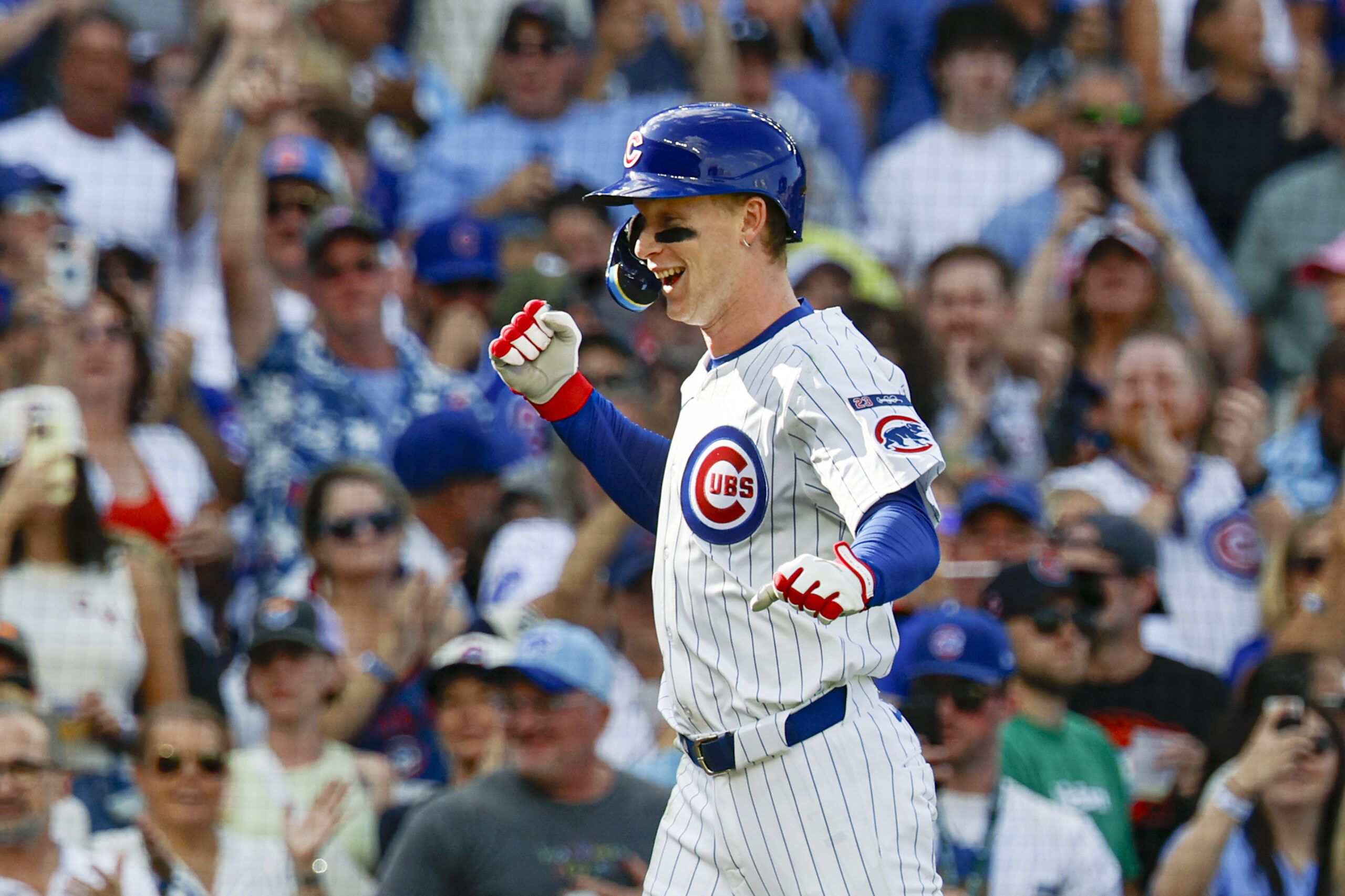
Pete Crow-Armstrong opened the 2025 season in spectacular fashion, generating early MVP discussion through a combination of elite defense, power, and speed.
By the end of July, he carried a .272/.309/.559 slash line with 27 home runs and 29 steals, showcasing the dynamic offensive ceiling that made him one of the most anticipated young center fielders in baseball.
His production tailed off sharply over the final two months, as he hit just four homers with six stolen bases and a .533 on-base plus slugging (OPS) across his final 51 regular season games, but the full-season body of work still demonstrated rare impact.
Despite the late slump, Crow-Armstrong was one of only seven players to record a 30-30 season in 2025, an accomplishment made even more noteworthy given that it was only his second full year in the majors.
The Cubs kept him in the lineup every day thanks to his elite glove in center field, backed by plus-15 Defensive Runs Saved and plus-24 Outs Above Average. His biggest statistical red flag remains plate discipline, as his 4.5% walk rate (BB%) ranked among the lowest in Major League Baseball for qualified hitters and limited his on-base potential during cold stretches.
Pete Crow-Armstrong’s Strengths, Weaknesses, and 2026 Fantasy Baseball Projections
In fantasy baseball points leagues, Crow-Armstrong’s strengths stem from his power-speed combination, everyday role, defensive security, and ability to accumulate counting stats through volume. His bat speed and athleticism create extra-base damage, and his range in center keeps him out of platoons.
The primary weaknesses for points scoring are his low walk rate and streaky contact, which cap his on-base percentage and can lead to inconsistent scoring during extended slumps.
For 2026, Crow-Armstrong projects for a batting average in the .255 to .265 range with the potential for 25 to 30 home runs and 30-plus stolen bases if he maintains a full workload.
Improved plate discipline would raise his points league ceiling dramatically, as even marginal increases in walks can convert into meaningful scoring gains. The power-speed profile and everyday defensive role give him one of the highest long-term ceilings in the outfield.
As far as outfielder hierarchy for fantasy baseball points leagues, I rank him at Tier 3 under Aaron Judge, Juan Soto, and Ronald Acuña Jr., among others, and higher than Wyatt Langford, Roman Anthony, and Brent Rooker.
Leave a Reply