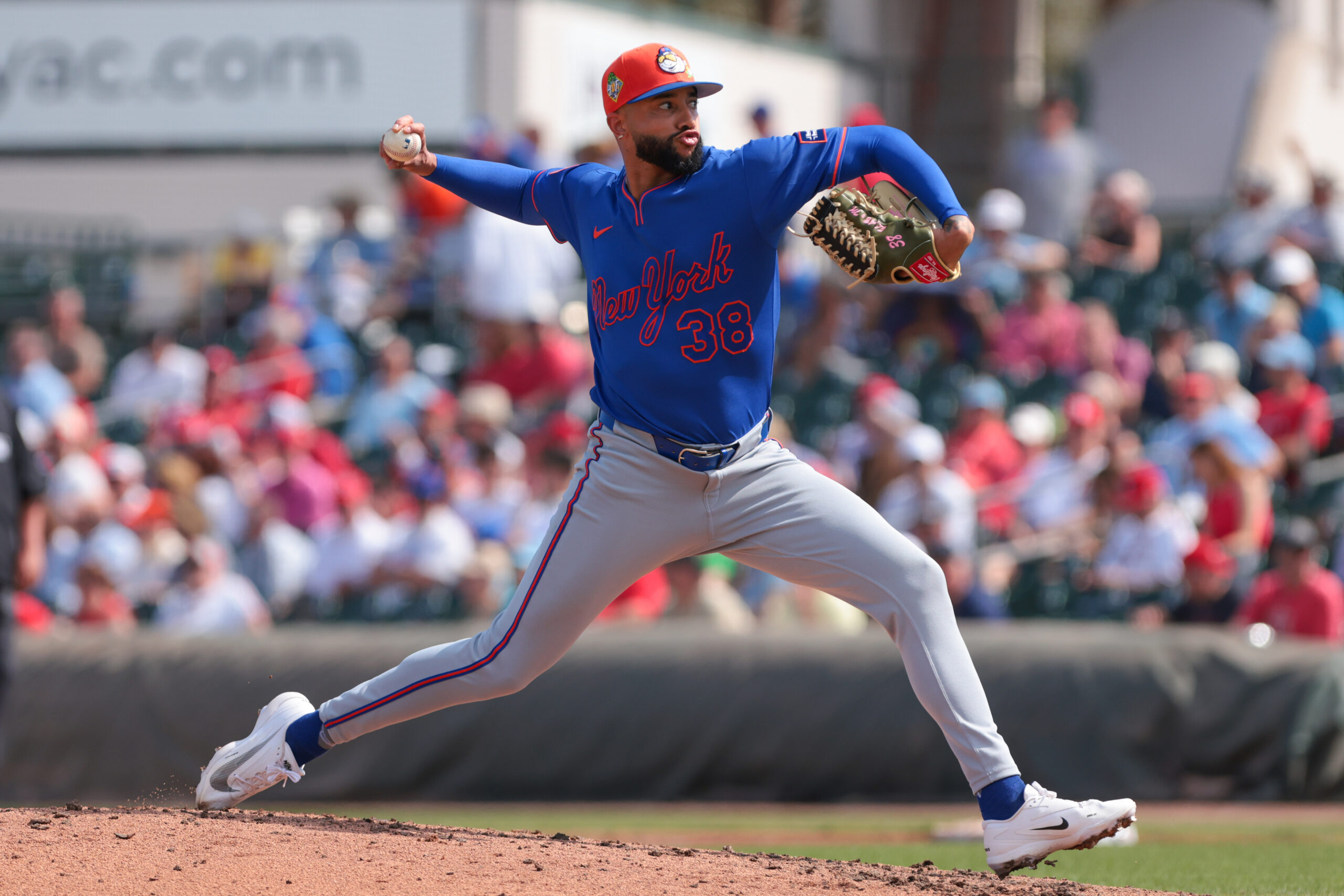
When the New York Yankees acquired Devin Williams from the Milwaukee Brewers last offseason, the expectation was that they had secured one of the premier closers in baseball. Instead, Williams endured an uncharacteristically rocky start. He struggled through April and was removed from the closer role before the end of the month, a surprising development for a pitcher with his track record.
The 31-year-old reclaimed ninth-inning duties a month later when Luke Weaver landed on the injured list, but another difficult stretch near the trade deadline intensified New York’s search for bullpen stability. After the Yankees acquired David Bednar, Williams was again pushed out of the closer role. From that point forward, however, his performance stabilized and more closely resembled his established baseline.
Despite the uneven season, the underlying metrics remained strong. Williams finished 13th among qualified relievers with a 25.1% strikeout-minus-walk percentage (K-BB%), reinforcing that his ability to miss bats and limit free passes remains intact.
The most striking number was the 2.11 gap between his 4.79 ERA and 2.68 FIP, the largest differential among qualified relievers. That disparity suggests his surface results were far worse than his underlying performance.
Williams signed a three-year, $51 million contract with the New York Mets and currently sits atop their closer depth chart. While the team may continue adjusting its bullpen mix, he enters 2026 as the favorite to close games.
What to Expect from Devin Williams in 2026 Fantasy Baseball
From a fantasy baseball points leagues standpoint, Williams’ strengths are rooted in elite swing-and-miss ability and strong strikeout-to-walk efficiency. Even in a season that appeared disappointing on the surface, his 25.1% strikeout-minus-walk percentage (K-BB%) demonstrates the type of dominance that translates well in points formats. When deployed consistently in the ninth inning, he offers high save potential with strong peripheral support.
The primary concern is role volatility. Williams lost the closer job twice in 2025, and while much of that was tied to short-term struggles and team context, it introduces some uncertainty.
His elevated ERA relative to FIP also highlights how sequencing and occasional command lapses can inflate his ratios if things do not break his way. In high-leverage roles, even brief downturns can carry outsized consequences.
Entering 2026, Williams projects as a high-end closer capable of delivering 30-plus saves with strong strikeout totals if he maintains a firm grip on the ninth inning in New York. The underlying metrics point toward positive regression in run prevention, positioning him for a rebound season.
As far as relief pitcher hierarchy for fantasy baseball points leagues, I rank him at Tier 2 behind Edwin Díaz, Mason Miller, and Jhoan Duran, among others, and higher than Josh Hader and Ryan Helsley.
Leave a Reply