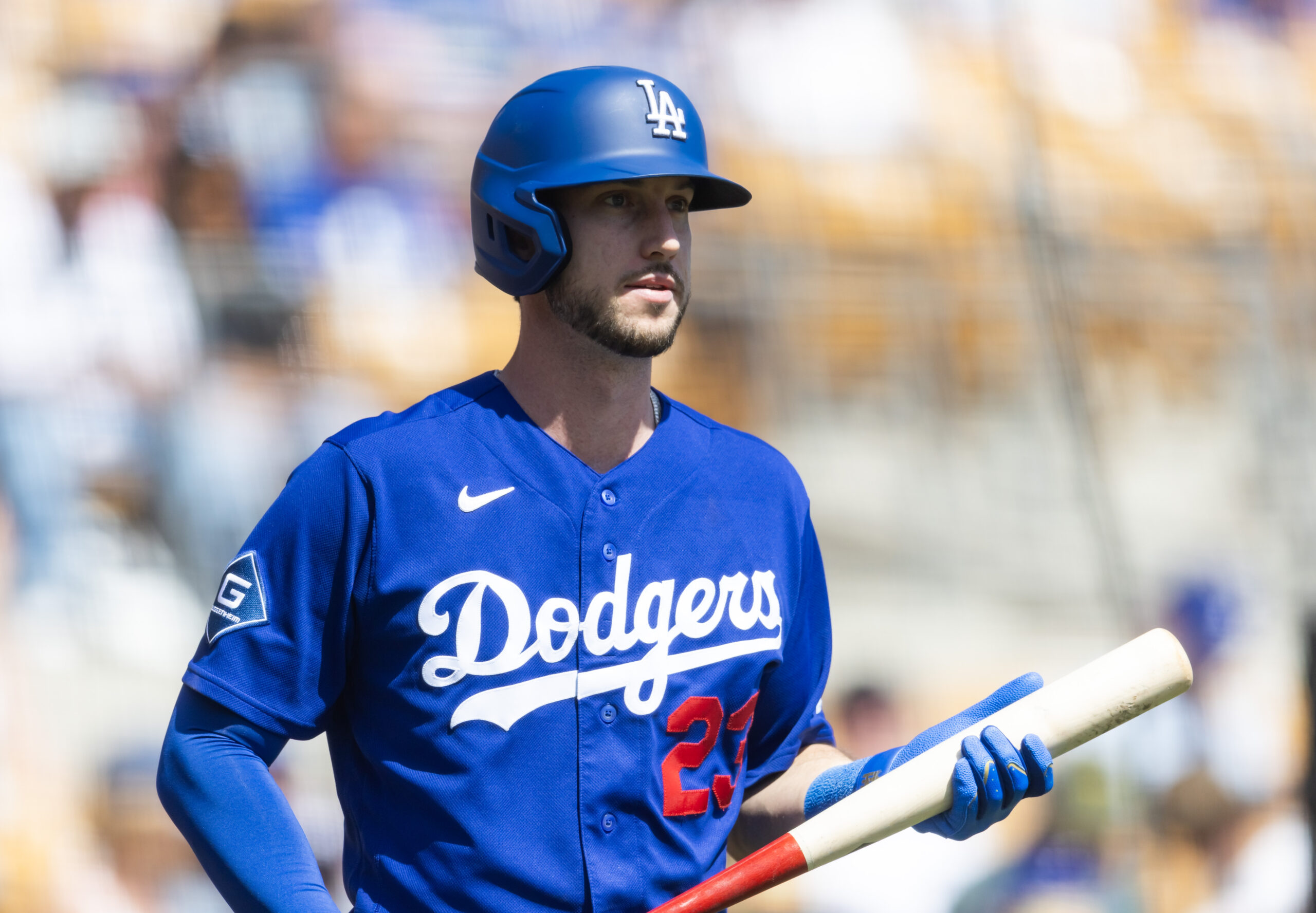
Holding the 1.11 in a fantasy baseball points league draft requires balancing ceiling with stability. At this point in the first round, the goal is to secure a five-category contributor who provides consistent weekly scoring without sacrificing upside. That is why Kyle Tucker is the selection here.
Why Kyle Tucker Makes Sense at Pick 1.11
Tucker enters 2026 after signing a four-year, $240 million contract with the Los Angeles Dodgers, placing him in one of the most favorable offensive environments in baseball.
Despite multiple injuries in 2025, he still produced a .266 average with 22 home runs, 25 stolen bases, 73 RBIs, 91 runs, and an .841 on-base plus slugging (OPS) across 136 games for the Chicago Cubs. His plate discipline remained a defining strength, reflected in an 87-to-88 walk-to-strikeout mark, and he delivered his third career 20-20 season while playing through a right-hand fracture during the summer and missing most of September with a left calf strain.
In points formats, Tucker’s value is driven by how he accumulates scoring. The combination of power, speed, and strong swing decisions creates multiple scoring paths every week. Walks elevate his floor, stolen bases add incremental value that many power hitters lack, and his run production remains steady because of lineup context and everyday playing time. That versatility makes him an ideal late-first-round anchor.
The move to Los Angeles further strengthens his profile. Dodger Stadium is more favorable for left-handed power than Wrigley Field, where he posted a .747 OPS at home compared to a .923 OPS on the road last season.
Now surrounded by Shohei Ohtani, Mookie Betts, Freddie Freeman, and Teoscar Hernández, among others, Tucker should see increased opportunities in both run-scoring and RBI situations. The Dodgers’ lineup depth reduces pressure and enhances consistency over the course of a full season.
Selecting Tucker at 1.11 establishes a roster identity built around balanced production. Because he contributes across power, speed, and on-base skill, the next phase of roster construction can focus on securing pitching volume or adding high-floor bats without chasing specific categories. His profile provides flexibility rather than forcing reactive drafting.
Durability is the primary variable to monitor after lower-body and hand injuries in recent seasons. His 22 home runs in 2025 marked his lowest total since 2020, but much of that dip can be tied to playing through the right-hand injury that impacted swing authority. When healthy, there is no indication of skill decline.
Tucker projects to hit in the .270 to .285 range with 25 to 30 home runs, 20 to 25 steals, 90 or more RBIs, and 100 or more runs if he maintains a premium lineup spot. His plate discipline should continue to translate directly into steady points league scoring, and the park change should help normalize his power output.
At draft slot 1.11, the objective is to secure a dependable, multidimensional foundation. Tucker delivers balanced production, lineup-driven opportunity, and strong weekly consistency, making him a clear and defensible selection in that position.
Leave a Reply