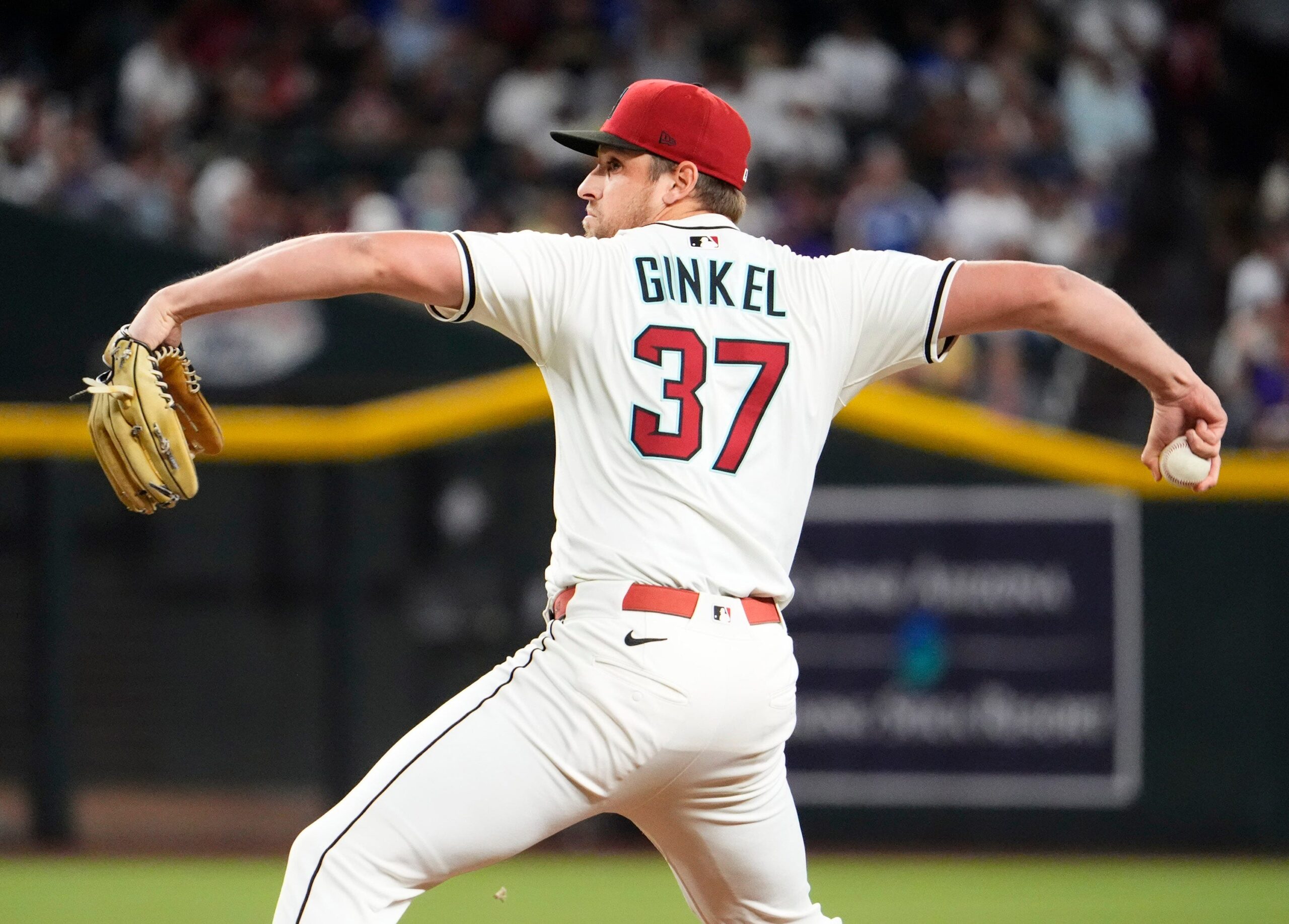
With A.J. Puk and Justin Martinez expected to miss most, if not all, of the 2026 season, Kevin Ginkel enters the year as one of the most experienced bullpen arms available to handle closing duties for the Arizona Diamondbacks. The 31-year-old right-hander is a logical candidate to receive save opportunities, though his status will depend heavily on his recovery from the right shoulder sprain that prematurely ended his 2025 campaign.
Before the injury, Ginkel had already been part of the conversation for the closer role. Across his career, he has recorded 16 saves, and the Diamondbacks may initially lean on that experience while sorting out their bullpen structure.
His contract situation also adds another layer of intrigue. With free agency approaching after the 2026 season, Ginkel could become a midseason trade candidate if Arizona falls out of contention.
Kevin Ginkel’s 2026 Fantasy Baseball Projection: Strengths and Weaknesses
From a fantasy baseball points leagues perspective, Ginkel’s value lies primarily in potential opportunity rather than proven production. If healthy, he could emerge as one of the main options to handle ninth-inning responsibilities early in the season.
However, his recent performance raises questions about reliability. In 2025, he struggled to a 7.36 ERA and 1.64 WHIP across 25 2/3 innings, numbers that highlight the need for a significant rebound.
The uncertainty surrounding Arizona’s bullpen also complicates his outlook. manager Torey Lovullo has mentioned Ginkel, Paul Sewald, and Ryan Thompson as potential options to close games. While Lovullo has expressed a preference for establishing a defined closer, the current makeup of the bullpen suggests the team could open the season using a committee approach.
Entering 2026, Ginkel projects as a speculative bullpen option whose fantasy value will depend largely on how Arizona distributes save opportunities. If he regains health and stabilizes his performance, he could see a meaningful share of ninth-inning work, though the presence of multiple candidates limits his ceiling.
His experience and previous usage in high-leverage situations could give him an early edge if the Diamondbacks decide to test a traditional closer rather than a full committee. Still, fantasy managers should approach carefully, as role volatility and performance risk remain significant factors entering the season.
As far as relief pitcher hierarchy for fantasy baseball points leagues, I rank him at Tier 11 behind Edwin Díaz, Mason Miller, and Jhoan Duran, among others, and higher than Hunter Gaddis, Aaron Ashby, and Luke Weaver.
Leave a Reply