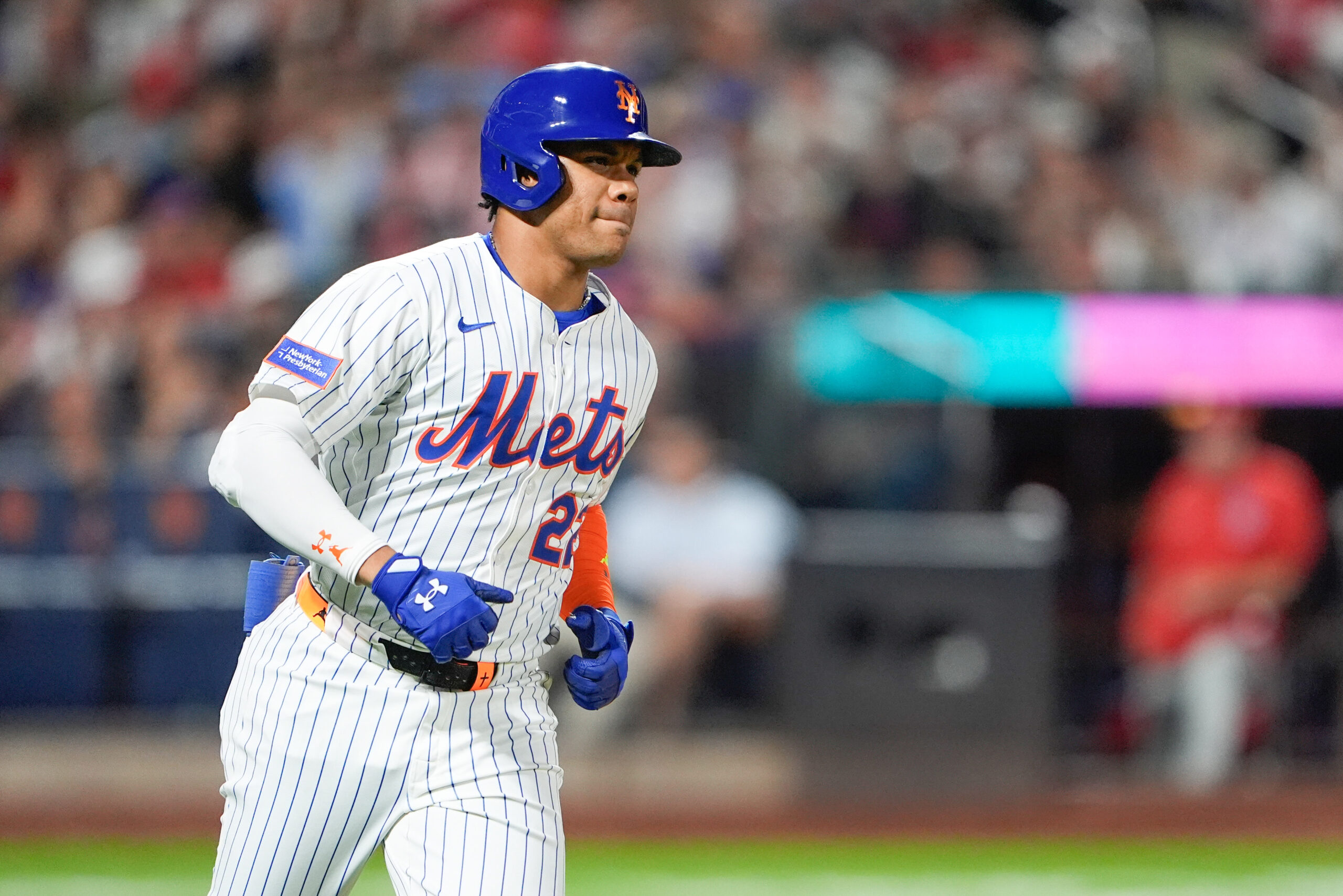
The NL East was one of baseball’s most frustrating divisions in 2025. The Atlanta Braves were the biggest disappointment in the National League, while the New York Mets collapsed late and let a promising season slip away.
The Washington Nationals learned their rebuild still has a long way to go, and although the Miami Marlins exceeded expectations in the standings, their run differential painted a far less encouraging picture. The Philadelphia Phillies were the lone club that largely delivered, even if their season ended with an October loss to the Los Angeles Dodgers.
This division should be much stronger in 2026. The Braves are positioned to rebound, the Mets reshaped their roster during an active offseason, and the Phillies remain built to contend. The Nationals are still developing, and the Marlins remain more interesting than dangerous for now.
What to Expect from the Philadelphia Phillies in 2026
Philadelphia was one of the steadiest and most complete teams in baseball in 2025, winning the NL East by 13 games over the Mets and finishing with 96 victories, its highest total since 2011. The Phillies ranked eighth in MLB in both runs scored and runs allowed, which reflects how balanced the roster was from Opening Day through September. Their postseason path was brutal, however, and a matchup with the Dodgers in the NLDS ended in a four-game exit.
There were several standout individual seasons within that strong team effort. Kyle Schwarber finished second in NL MVP voting, while Cristopher Sánchez was runner-up in the Cy Young race.
Bryce Harper, Trea Turner, and Ranger Suárez all turned in productive years, and Zack Wheeler was putting together another dominant season before a blood clot in his right shoulder sidelined him in August. The bullpen also got a needed boost when the club acquired Jhoan Duran at the trade deadline.
The Phillies stayed true to their recent identity by making targeted moves rather than reshaping the roster. Schwarber was rewarded with a five-year contract after his outstanding season, and J.T. Realmuto eventually returned on a three-year deal. In the outfield, Philadelphia took a one-year flier on Adolis García, hoping a change of scenery can help him stop a two-year decline.
There was also some notable movement in the bullpen and rotation. Matt Strahm was traded to the Kansas City Royals, with Brad Keller brought in to help replace those innings. The biggest loss came when Suárez departed for the Boston Red Sox, leaving the Phillies with an important hole to cover.
Philadelphia has been operating in a World Series-or-bust window for years, and that remains true now. The lineup may not be better than it was in 2025, but it should still be productive enough to support another contender.
Harper still has room to outperform last season, García could offer value if he rebounds, and rookie Justin Crawford might inject some energy if he adjusts quickly. Those factors could help offset any natural regression from Schwarber’s huge season.
The rotation has the upside to be one of the league’s best if Wheeler returns sometime in the first half and resumes pitching at an ace level. Andrew Painter could also begin making a real impact in the majors, and a full season of Duran at the back of the bullpen could improve Philadelphia’s ability to close out tight games.
The Phillies should still be good, but the margin for error is smaller in a division with the Mets and Braves. If the win total slips even modestly, Philadelphia could finish third. Age is the obvious concern in the lineup, with Turner, Harper, Schwarber, García, and Realmuto all at least 32 years old.
If several of those veterans decline at once, the offense could become more ordinary than dangerous. The rotation also carries risk despite its upside. Wheeler’s recovery is critical, and Aaron Nola needs to recover from a 2025 season in which he posted a 6.01 ERA.
If both questions break the wrong way, what looks like a strength could quickly become a problem. There is uncertainty at the back end as well, with Taijuan Walker and Painter hardly guaranteed contributors.
Philadelphia is unlikely to cruise to another division title, but that says more about the improving competition than the Phillies themselves. A total in the 90-95 win range feels realistic, and that should be enough to reach October either as division champions or a Wild Card team. Once there, they have enough talent to challenge anyone, including the Dodgers.
Can the New York Mets Rebound in 2026?
Few teams had a more painful 2025 than the Mets. They were not necessarily the most disappointing club overall, but no team built expectations and then collapsed as dramatically. New York led Philadelphia by 1.5 games on July 28 before a disastrous 2-14 stretch wiped out its division hopes.
Later, an eight-game losing streak from Sept. 6-13 erased its cushion in the Wild Card race. By season’s end, the Mets were 13 games behind the Phillies and lost a tiebreaker with the Cincinnati Reds for the final playoff spot.
The stars largely did their jobs. Juan Soto posted a .921 OPS and finished sixth in baseball, Pete Alonso drove in 126 runs to rank second in the majors, and Francisco Lindor delivered a 30-30 campaign.
The supporting cast was the bigger issue, especially the bottom of the lineup and a rotation that lacked a true ace and got too little from several veterans. The Mets began the winter on shaky footing, particularly when Alonso and Edwin Díaz departed, even though the club added Devin Williams.
But things changed quickly in mid-January. The front office signed Bo Bichette, traded for Luis Robert Jr. and Freddy Peralta, and added Jorge Polanco in free agency. That stretch transformed the feel of the offseason and gave the roster a deeper offensive base.
New York also swapped Brandon Nimmo for Marcus Semien, signed Luke Weaver, and dealt Jeff McNeil to the Oakland Athletics. The biggest late blow came when Lindor required surgery to repair a fractured hamate bone, which creates early-season uncertainty for one of the club’s most important players.
The Mets have the pieces to win the NL East. Alonso’s power will be missed, but the lineup now looks deeper, and it could get another lift if prized rookie Carson Benge arrives quickly and contributes. Semien and Robert are both candidates to rebound, and if that happens, the offense could be far more complete than last year’s version.
Peralta gives the rotation the front-line arm it lacked in 2025. If Nolan McLean builds on his promising debut and Sean Manaea, Clay Holmes, and Kodai Senga become more consistent, the group could be a major strength. New York also has impressive depth, especially if Jonah Tong pushes for meaningful innings after a strong spring.
The bullpen is the clearest pressure point. Williams has elite stuff, but he struggled badly enough with the New York Yankees last season to lose the closer role multiple times. If he cannot secure the ninth inning, the rest of the relief hierarchy could become unstable.
The rotation has options, but many of them are either unproven or coming off shaky seasons. The lineup’s floor is better than it was last season, but the volatility remains significant. Robert, Semien, Benge, Mark Vientos, Brett Baty, and Francisco Alvarez all have a wide range of possible outcomes.
If too many of those bets fail, the Mets could again find themselves fighting into late September just to claim the final Wild Card spot. This roster is too talented to miss the postseason again. The Mets should stay in the NL East race deep into the year while putting themselves in strong position for an October berth.
With Steve Cohen willing to spend, the front office should also have the flexibility to address weaknesses at the deadline.
Miami Marlins: Still Rebuilding in 2026?
On the surface, Miami took a major step forward in 2025. The Marlins won 79 games, their second-best total since 2017, and improved by 17 victories over the previous season. But the underlying numbers tell a less flattering story.
Their minus-89 run differential ranked 24th in baseball, worse than the 71-win Pittsburgh Pirates and only slightly better than the Minnesota Twins and Chicago White Sox. Kyle Stowers was the biggest bright spot, breaking out with a .912 OPS and leading the club with 4.0 WAR.
Jakob Marsee showed real promise in the second half, posting an .842 OPS with 14 steals in 55 games. Edward Cabrera also had the best season of his career, recording a 3.53 ERA over 26 starts.
The rotation, though, was undermined by injuries to Max Meyer, Braxton Garrett, and Ryan Weathers, while Sandy Alcantara struggled badly and finished with a 5.36 ERA. Miami stayed busy in typical Marlins fashion, but the roster did not clearly improve.
Pete Fairbanks was the headline addition, giving the club a legitimate late-inning reliever for the first time in years. Christopher Morel and Chris Paddack were also added on one-year deals. At the same time, the Marlins weakened the rotation by trading Weathers to the Yankees and Cabrera to the Chicago Cubs.
The returns included seven prospects, with Owen Caissie standing out as the top name. There is still some upside in the rotation. Alcantara posted a 3.33 ERA in the second half, which at least suggests he could move back toward ace territory.
Eury Pérez has frontline talent, and Meyer, Garrett, and Jansen Junk all have paths to useful seasons. The system also includes notable pitching prospects in Thomas White and Robby Snelling, both of whom could debut.
Offensively, Miami could be respectable if Stowers and Marsee are healthy and productive over full workloads. Caissie also has the potential to emerge as a legitimate power threat if he keeps the strikeout rate in check. In a best-case season, the Marlins hang around the Wild Card race into late summer.
There is still a great deal of fragility here. Alcantara remains inconsistent, and the rest of the rotation lacks certainty. Fairbanks is talented but has rarely stayed healthy long enough to be fully trusted.
At the plate, Stowers is the only hitter who feels close to reliable, while Marsee still has to prove his contact and hard-hit profile can support his production. A return to roughly 70 wins is entirely possible. Once Miami traded Weathers and Cabrera, it became clear the franchise was still operating in a rebuilding frame.
The lineup lacks enough impact bats, and the club does not yet look ready to push for contention. Expect the Marlins to remain deadline sellers and finish below 75 wins.
What’s Next for the Atlanta Braves?
Atlanta was one of baseball’s biggest letdowns in 2025. A team that had made the postseason seven straight years opened with seven consecutive losses and never fully recovered. The Braves posted losing records in June and July, and although the offense improved after the All-Star break, it did so after their playoff hopes had largely faded.
The pitching staff was mediocre from start to finish and ranked 22nd in ERA. There were disappointments across the roster. Ozzie Albies and Michael Harris II underperformed, while Austin Riley and Ronald Acuña Jr. dealt with injury-affected seasons.
The rotation was hit especially hard, with Bryce Elder the only pitcher to make more than 23 starts. Jurickson Profar’s 80-game PED suspension added to the chaos. Despite the disappointing season, Atlanta took a fairly measured approach over the winter.
The Braves retained closer Raisel Iglesias on a one-year contract and signed Robert Suarez to a three-year deal to strengthen the bullpen. Mike Yastrzemski was added to help against right-handed pitching, while Mauricio Dubón and Jorge Mateo improved the infield depth.
Ha-Seong Kim signed a one-year deal, but his timeline changed when hand surgery after a slip on ice left him expected to miss four to five months. Then came another major setback, as Profar tested positive for PEDs again and received a full 162-game suspension.
Atlanta still has the talent to win the division. Much of the lineup is the same group that led the majors in runs scored in 2023, and most of those core players are still in or near their prime. A full season from Acuña would be enormous, and the Braves would also benefit greatly from bounce-back seasons by Riley, Albies, and Harris.
The rotation has major upside if Chris Sale can make 30 starts and Spencer Strider rediscovers his old form. Reynaldo López and Grant Holmes are capable of giving solid innings at the back of the staff, and the bullpen has the talent to be a real strength.
The downside was already visible in 2025, when Atlanta won only 76 games. The challenge is that some of last year’s concerns now look more like trends than flukes. Riley, Albies, and Harris have each disappointed for two straight seasons, and the lineup already lost Profar’s production before Opening Day.
There is also considerable rotation risk. Sale is 36 with a long injury history, Strider may not regain his previous velocity, and Spencer Schwellenbach and Hurston Waldrep are already on the 60-day IL with elbow issues.
López barely pitched last year, and Holmes finished 2025 with a major elbow injury. That leaves plenty of room for Atlanta’s rotation to become a major problem. At one point this winter, the Braves looked like an easy postseason pick.
That still could happen, but the confidence is lower now. Injuries and suspensions are already piling up, and Atlanta may need to fight through a crowded Wild Card picture with teams such as the San Diego Padres, San Francisco Giants, and Reds.
Washington Nationals: 2026 Outlook
Washington started 2025 more competitively than expected and sat just two games under .500 when June began. After that, the season unraveled. The Nationals failed to win even 10 games in each of the next three months and lost more than 90 games for the fifth consecutive year.
The decline was closely tied to the performances of key players. James Wood cooled off badly and posted a .623 OPS in the second half, while MacKenzie Gore entered the All-Star break with a 3.02 ERA before collapsing to a 6.75 mark the rest of the way.
Dylan Crews and Keibert Ruiz also disappointed, and the pitching staff as a whole was a disaster, finishing with a 5.35 ERA that ranked ahead of only the Colorado Rockies. The Nationals faced the reality that their rebuild needed more time.
Reliable reliever Jose A. Ferrer was traded to the Seattle Mariners for catching prospect Harry Ford, who now enters the mix with Ruiz. In January, Washington made a larger move by dealing Gore to the Texas Rangers for five prospects.
The problem is that the most notable names in that package are still years from helping in the majors. The only additions likely to matter much in 2026 are Foster Griffin and Miles Mikolas, which says plenty about where the roster currently stands.
Washington is very unlikely to stay in the playoff race, so success will be measured through player development. Wood needs to recapture his early-season form, Crews must finally show signs of becoming an impact bat, and Ruiz has to move his career back in a better direction.
There is also room for growth from C.J. Abrams and Luis García Jr., while Daylen Lile will try to build on his late-season promise. On the pitching side, the club can at least hope for progress from Cade Cavalli and the return of Josiah Gray from Tommy John surgery.
There is a real chance Washington is one of the two worst teams in the National League. Without Gore, the staff could be even weaker than it was last season, and the young hitters still have more questions than answers.
Wood has star upside but must cut the strikeouts, Ruiz continues to struggle with quality of contact, and Crews owns a .634 OPS through 116 career games. The Nationals could be buried in the standings by Memorial Day.
Washington looks likely to finish near the bottom of the league again. The pitching staff is simply too thin to keep the club competitive over six months. The bigger priority will be seeing meaningful steps forward from Wood and several other young position players.
Leave a Reply