Handling the pitching staff properly and effectively is one of the toughest things to do in fantasy baseball over the course of an entire season. To be successful, you need to keep a close eye on several factors, but there are a few strategies to increase your chances of assembling a strong pitching staff.
Draft an elite pitcher if you have the chance
Spending a first-round pick on a starting pitcher is risky, but it could pay dividends. A pitcher with an elite outing (for instance, 1 ER on 8.0 IP with a 11:1 K:BB) can outscore any hitter, and having that kind of impact arm could be huge in DFS, especially if that hurler is a two-start pitcher on any given week.
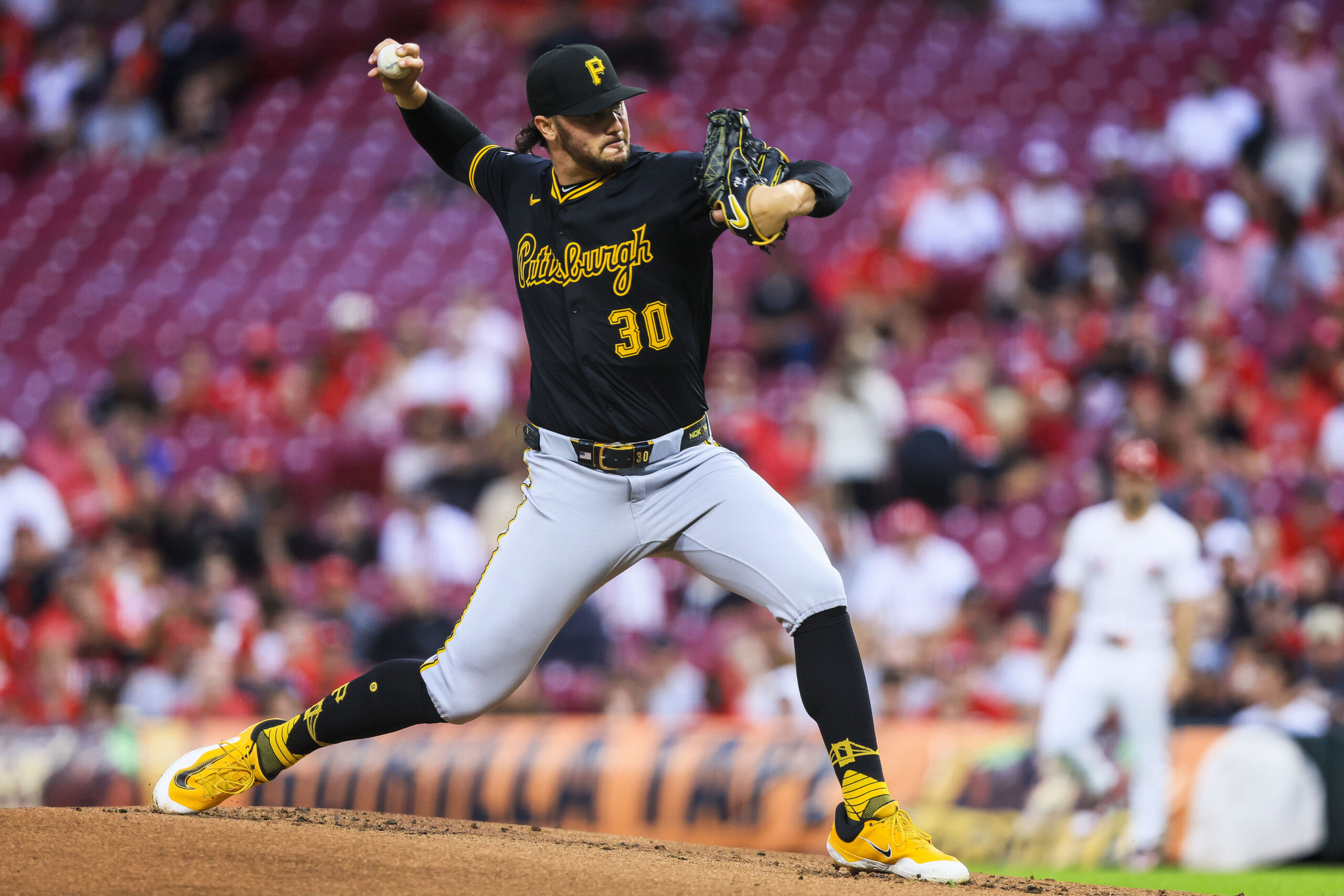
That said, there aren’t many pitchers who could be worthy of a first-round pick. If you’re not choosing Paul Skenes, Tarik Skubal or Garrett Crochet in the first round, then you might as well skip selecting an arm in the first round. There’s plenty of elite talent worth adding in the second and third rounds as well.
Keep a close eye on your arms
If you drafted someone like Skenes, Crochet or Cristopher Sanchez, you don’t have to worry about their roles unless they suffer an injury. But what happens when you take a flyer on a third starter in the later rounds, and that pitcher gets off to a rough start? He’s immediately at risk of being droppable, especially if he also loses his role in the rotation and moves down the pecking order in his team. Thus, knowing the roles of your pitchers is vital to have a clear understanding of what your needs are as the season progresses.
Keeping an eye on the performance of each of your starters is a must. If one of your pitchers is struggling, a replacement must be found quickly. Having an underperforming pitcher for a start or two can really kill your chances on any given week. Thus, being on top of how your pitchers are behaving is key to having a successful rotation.
Monitor the weekly workload
This is perhaps the best and most efficient strategy to handle the pitching staff in fantasy, as pitchers who make two starts on a given week are extremely valuable. With each team playing at least six games per week, you’ll always have a few hurlers who will make two starts instead of one, making them extremely valuable in season-long formats.
After all, fantasy baseball is a numbers game determined by volume. Make sure to identify which pitchers have two starts every week, and find hidden gems who also comply with that threshold in the waiver wire. Which leads us to…
Keeping a close eye on the waiver wire
Fantasy managers who kept a close eye on the waiver wire during the 2025 season in standard formats probably benefited from the promotion of Cade Horton. The Cubs’ hurler opened the season in the minors but was outstanding when called up and posted a pristine 1.03 ERA while going 8-1 across 12 starts. Those who weren’t looking… well, you know the story.
Handling the waiver wire effectively is a must across all fantasy baseball formats — and in every sport, I’d add. However, consider starting pitchers regularly have one start per week, it’s tougher if you miss on a waiver pick-up. Since there are limited additions per week, being savvy with the pitching staff could go a long way.
Monitor outside factors
If you’re playing DFS, there are several other factors that you need to address when selecting your pitching staff. But two areas that are absolutely key are the weather and park factors. Those two traits can make-or-break your pitching staff.
Simply put, it’s not the same to have a pitcher at Coors Field or Great American Ball Park than one pitching at T-Mobile Park or at Wrigley Field with the wind blowing in. Prepare accordingly.
If you follow these rules, or most of them, you should be just fine when it comes to handling your pitching staff en route to a successful 2026 season in fantasy baseball.
Leave a Reply