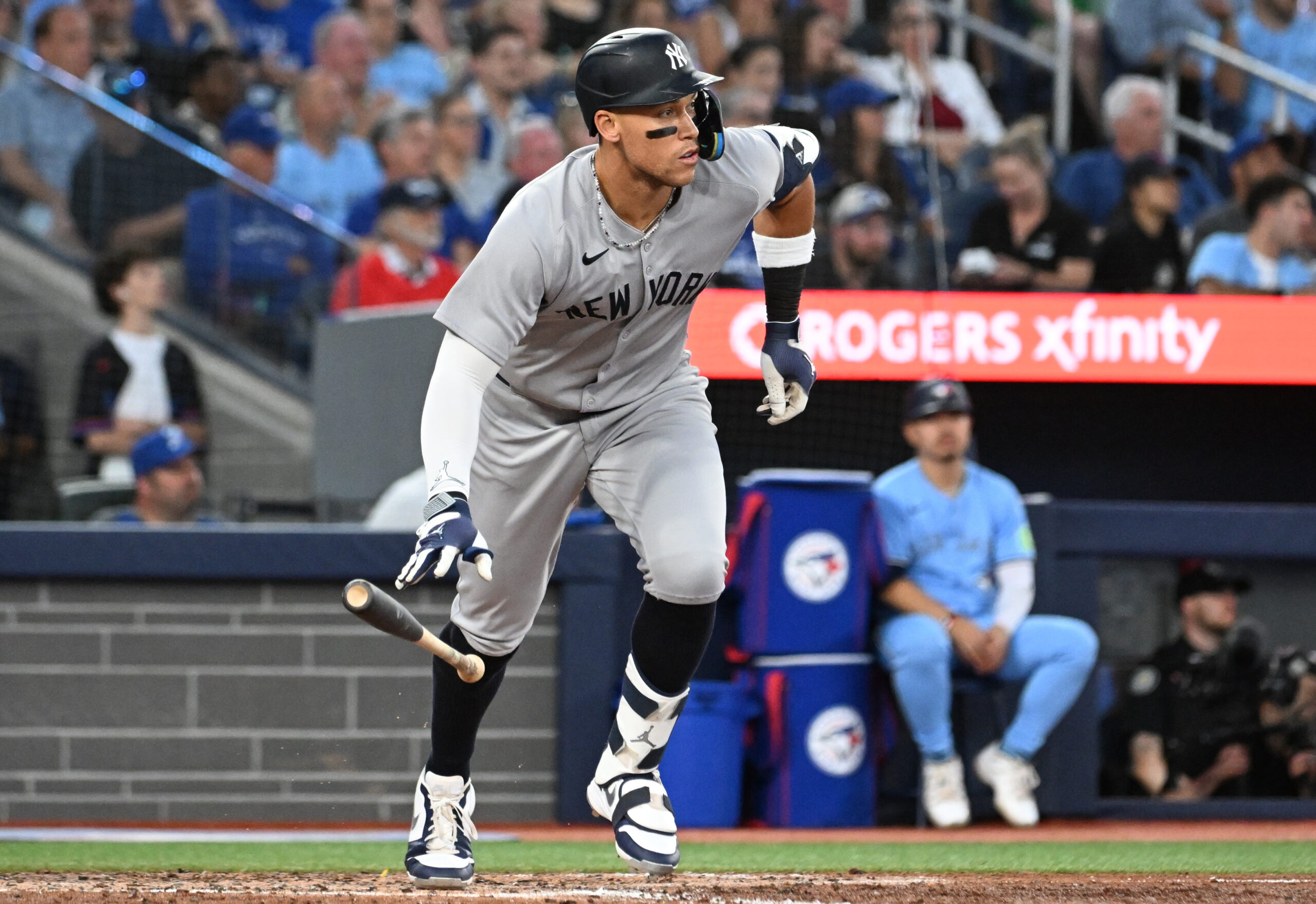
Kyle Schwarber led Major League Baseball with 132 RBIs last season, followed by Pete Alonso with 126, Cal Raleigh with 125, Eugenio Suárez with 118, and Aaron Judge with 114. That group defined the league’s top run producers, but heading into 2026, changes in team context and lineup structure introduce a different layer to projecting who will finish at the top.
RBI totals are driven not only by power but also by opportunity, lineup positioning, and the ability to consistently capitalize with runners on base.
Why Aaron Judge Has the Strongest Path to the 2026 RBI Title
Aaron Judge projects as the most likely player to lead MLB in RBIs in 2026 because of his ability to combine power with consistent contact quality in run-producing situations. His approach allows him to drive the ball to all fields, which makes him difficult to pitch around when runners are on base.
He benefits from hitting in the middle of a lineup built to generate traffic, giving him frequent RBI opportunities. Unlike more streak-dependent hitters, Judge’s production tends to remain steady throughout the season, allowing him to accumulate RBIs at a consistent pace. After finishing with 114, he is well within range to lead the league with even a moderate increase in opportunities.
How Pete Alonso’s Move to the Orioles Boosts His RBI Ceiling
Pete Alonso enters 2026 in a significantly improved run-producing environment after moving from the Mets to the Orioles. His profile as a pure middle-of-the-order power hitter already supports high RBI totals, but the lineup around him now increases the likelihood of consistent opportunities with runners on base.
His strength lies in his ability to do damage against pitches in the zone, particularly when he can get extended and lift the ball with authority. Alonso does not need perfect conditions to drive in runs, and his role in the heart of the order positions him to remain one of the top RBI threats in the league.
Kyle Schwarber’s Volume Approach Keeps Him in the RBI Race
Kyle Schwarber led the league with 132 RBIs by fully embracing a power-first approach. His ability to elevate the ball consistently allows him to generate extra-base hits in key situations, which directly translates to run production.
He thrives on volume, and even with streaky stretches, his approach ensures that he continues to create RBI chances over the course of the season. When he is locked in, he can produce runs in bunches, keeping him firmly in the race to lead the league again.
How Cal Raleigh’s Switch-Hitting Power Sustains His RBI Production
Cal Raleigh’s 125-RBI season highlights how valuable his switch-hitting ability is in run-producing situations. He can maintain his power output regardless of matchup, which allows him to stay in favorable spots in the lineup every day.
His swing is designed to lift the ball consistently, and that approach translates well with runners on base. As long as he continues to hit in the middle of the order, his ability to generate home run-driven RBIs keeps him in contention for the league lead.
Eugenio Suárez’s Return to the Reds Raises His RBI Ceiling
Eugenio Suárez enters 2026 with a different context after splitting time between the Diamondbacks and Mariners and now returning to the Reds. His power-first approach is built around pulling and elevating the ball, which allows him to drive in runs in clusters when he is in rhythm.
The change in team environment could increase his RBI opportunities, particularly if he is surrounded by hitters who consistently reach base. His production can be streaky, but his ability to generate multi-RBI games keeps him within range of the league leaders.
Final Projection for the 2026 MLB RBI Leader
Aaron Judge projects as the most likely player to lead Major League Baseball in RBIs in 2026. His combination of consistent power, all-field hitting ability, and lineup-driven opportunities gives him the most stable path to finishing at the top of the leaderboard, especially as team context shifts create new variables for the rest of the field.
Leave a Reply