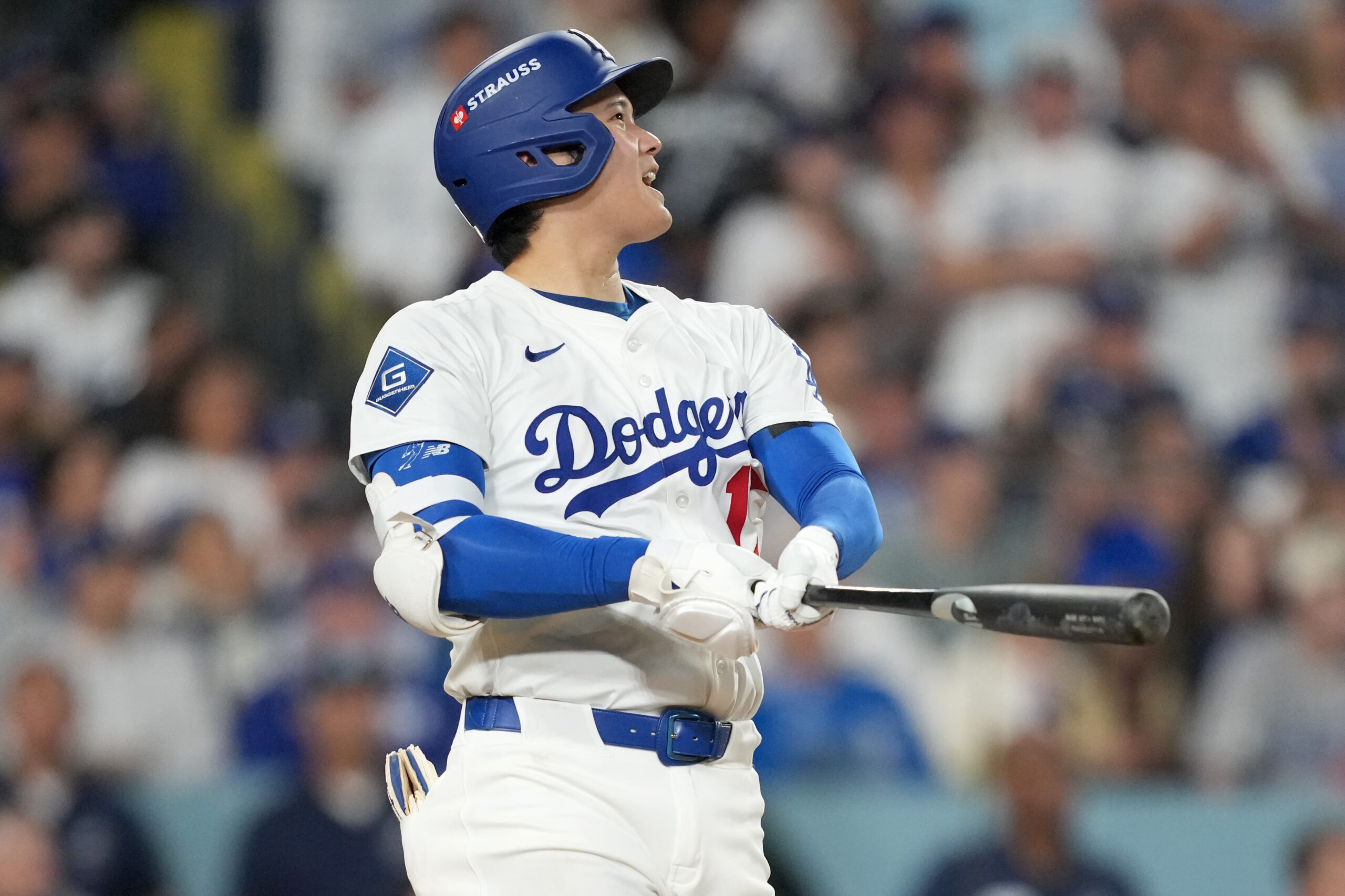
Cal Raleigh led Major League Baseball with 60 home runs last season, followed by Kyle Schwarber with 56, Shohei Ohtani with 55, Aaron Judge with 53, and Eugenio Suárez with 49.
That group established itself as the clear power tier across the league, and heading into 2026, the same five hitters remain the most logical candidates to finish atop the home run leaderboard. The separation comes down to how sustainable each player’s power profile is over a full season.
Why Shohei Ohtani’s All-Field Power Makes Him the 2026 Favorite
Shohei Ohtani stands out as the most complete hitter among this group. His power does not rely on one specific zone or approach, as he can drive the ball out of the park to all fields. That ability makes him less vulnerable to defensive shifts or pitching adjustments, allowing his production to remain consistent throughout the season.
His swing is built to generate lift while maintaining strong bat control, which reduces the likelihood of prolonged slumps. After finishing with 55 home runs, Ohtani is already operating at a level where maintaining similar output or making a slight jump could be enough to lead the league. His balance of power and consistency gives him the strongest case to finish first in 2026.
Can Cal Raleigh Repeat His Historic 60-Home Run Season?
Cal Raleigh’s 60-home-run season sets the benchmark, and his power from both sides of the plate makes him a constant threat. As a switch-hitter, he avoids matchup disadvantages and can maintain his power production regardless of opposing pitching.
His swing is designed to elevate the ball consistently, which supports high home run totals. However, the physical demands of playing catcher introduce a level of difficulty in sustaining that output across another full season. The power is legitimate, but repeating a historic total requires near-perfect conditions again.
Why Kyle Schwarber’s Approach Makes Him a Perennial Home Run Threat
Kyle Schwarber remains one of the most consistent power hitters in baseball because his entire offensive approach is centered on producing home runs. He prioritizes lift and hard contact, accepting the trade-offs that come with a power-first profile.
This approach allows him to accumulate home runs in large quantities over the course of a season. Even when he goes through cold stretches, his volume of fly balls keeps him in contention. That consistency in approach makes him a reliable candidate to finish near the top again.
How Aaron Judge’s Raw Power Keeps Him Firmly in the Home Run Race
Aaron Judge continues to be one of the most dominant power hitters in the game. His strength allows him to generate home runs without needing perfect contact, and his ability to hit the ball with authority to all fields makes him difficult to contain.
In addition to his power, his plate discipline helps him avoid extended slumps, keeping his production steady over time. After hitting 53 home runs, he remains well within range to lead the league if he maintains a full, healthy season.
Eugenio Suárez’s Power-First Swing Offers a Massive Ceiling
Eugenio Suárez rounds out the group with a profile built entirely around power. His pull-heavy swing and commitment to elevating the ball allow him to generate home runs in bunches, as shown by his 49-home-run season.
While his approach can lead to streakiness, it also gives him the type of ceiling needed to compete for the league lead. When his timing is locked in, he can produce at a level comparable to any hitter in this group.
2026 MLB Home Run Leader Final Projection
Shohei Ohtani projects as the most likely player to lead Major League Baseball in home runs in 2026. His combination of all-field power, consistent contact quality, and ability to sustain production over a full season gives him the most stable path to finishing at the top of the leaderboard.
Leave a Reply