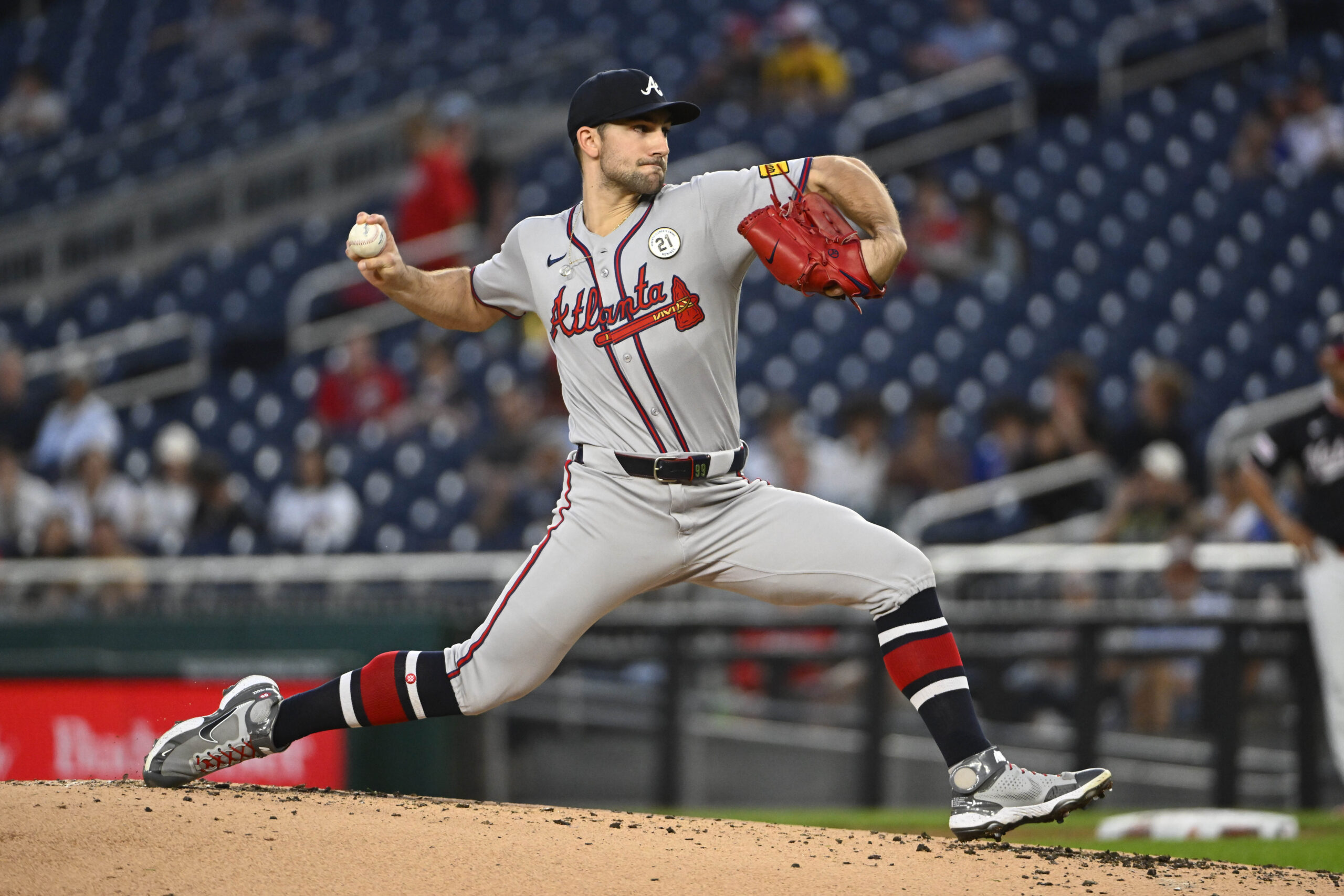
Spencer Strider’s 2025 season served as a reminder of how much post-surgery uncertainty can impact even elite fantasy arms.
As Strider entered the year after internal brace surgery, there was limited historical precedent for pitchers returning to full effectiveness in their first season back. That caution proved warranted. Although Strider ultimately logged 125.1 innings, more than doubling the informal 60-inning benchmark that had previously been noted for similar recoveries, the overall performance fell short of expectations.
There were flashes of the old dominance, particularly early in the year when Strider was touching triple digits in shorter spring outings. However, his in-season velocity settled roughly 2 mph below his pre-surgery 2023 levels, and the results reflected that dip.
His strikeout rate (K%) fell from 36.8% to 24.3%, while opposing hitters posted a .261 average after managing just .210 against him prior to the procedure. Encouragingly, offseason reports indicate Strider has focused on refining his pitch mix and working to regain lost velocity, but the key question for 2026 will be whether that improved arm speed holds throughout the full season rather than just in spring action.
What to Expect from Spencer Strider in 2026 Fantasy Baseball: Strengths and Weaknesses
Strider’s strengths remain tied to his elite swing-and-miss foundation and proven ability to miss bats at a high rate when his fastball is fully powered. Even in a diminished season, he demonstrated the durability to handle 125.1 innings after a complex procedure, and he finished on a more stable note by allowing two runs or fewer in four of his final six starts.
If the velocity rebounds even partially, his strikeout upside immediately returns him to high-end fantasy relevance in points league formats.
The primary concern is whether the reduced velocity and command inconsistency seen in 2025 represent lingering post-surgery effects rather than a temporary dip. The drop in strikeout rate and rise in opponent batting average both highlight a thinner margin for error, and fantasy managers must account for potential volatility if the stuff does not fully return.
Until he consistently shows pre-2024 form deep into the season, there is more risk baked into his profile than his name value alone might suggest.
From a fantasy baseball points league perspective, Strider projects as a high-upside but volatile starter for 2026. A reasonable expectation includes improved strikeout totals with an ERA trending back toward the mid-3.00 range if the velocity gains stick, though workload and performance variance remain part of the risk profile.
As far as pitcher hierarchy for fantasy baseball points leagues, I rank him at Tier 4 under Tarik Skubal, Garrett Crochet, and Paul Skenes, among others, and higher than Nolan McLean, Framber Valdez, and Chase Burns.
Leave a Reply